
On View October 9-November 8, 2026
Opening Reception: Saturday, Oct 10, 6–8 pm
Nansi T. Lent
A Thread of Longing: Works From 1976-2026
A Thread of Longing brings together approximately 20 works by Nansi T. Lent spanning over 50 years, from 1974 to the present. The exhibition traces a continuing emotional and artistic trajectory: from early figurative and narrative works rooted in family, memory, world events, and human attachment to recent abstractions exploring prayer, self-talk, and the persistent search for connection and meaning.
Across the decades, the underlying impulse remains, even as Lent's visual language changes. Figures gradually recede; tally marks, repeated gestures, glyphs, layered color, and asemic (or illegible) writing take their place. Longing becomes less a subject depicted than a force enacted through repetition: an attempt to speak beyond words, count what cannot be measured, and give visible form to inner experience. What begins as an effort to portray emotional experience evolves into an abstract, contemplative practice. A Thread of Longing asks not whether longing can be resolved, but what it can reveal—and what new forms it may call into being.
About the artist: Based in Rhinebeck, NY, Nansi T. Lent holds a BA in Studio Art from Boston College and an MA in Visual Arts Administration from New York University. Her work has appeared in more than 90 exhibitions throughout the Northeast and beyond in the last decade. In 2018 she founded Womenswork.art in Poughkeepsie, NY, and has served on the boards of the National Association of Women Artists and the Woodstock Artists Association and Museum, participated in the Catwalk Art Residency and Openings, and curated and juried numerous exhibitions. Her work is held in several private collections both in the U.S. and abroad.
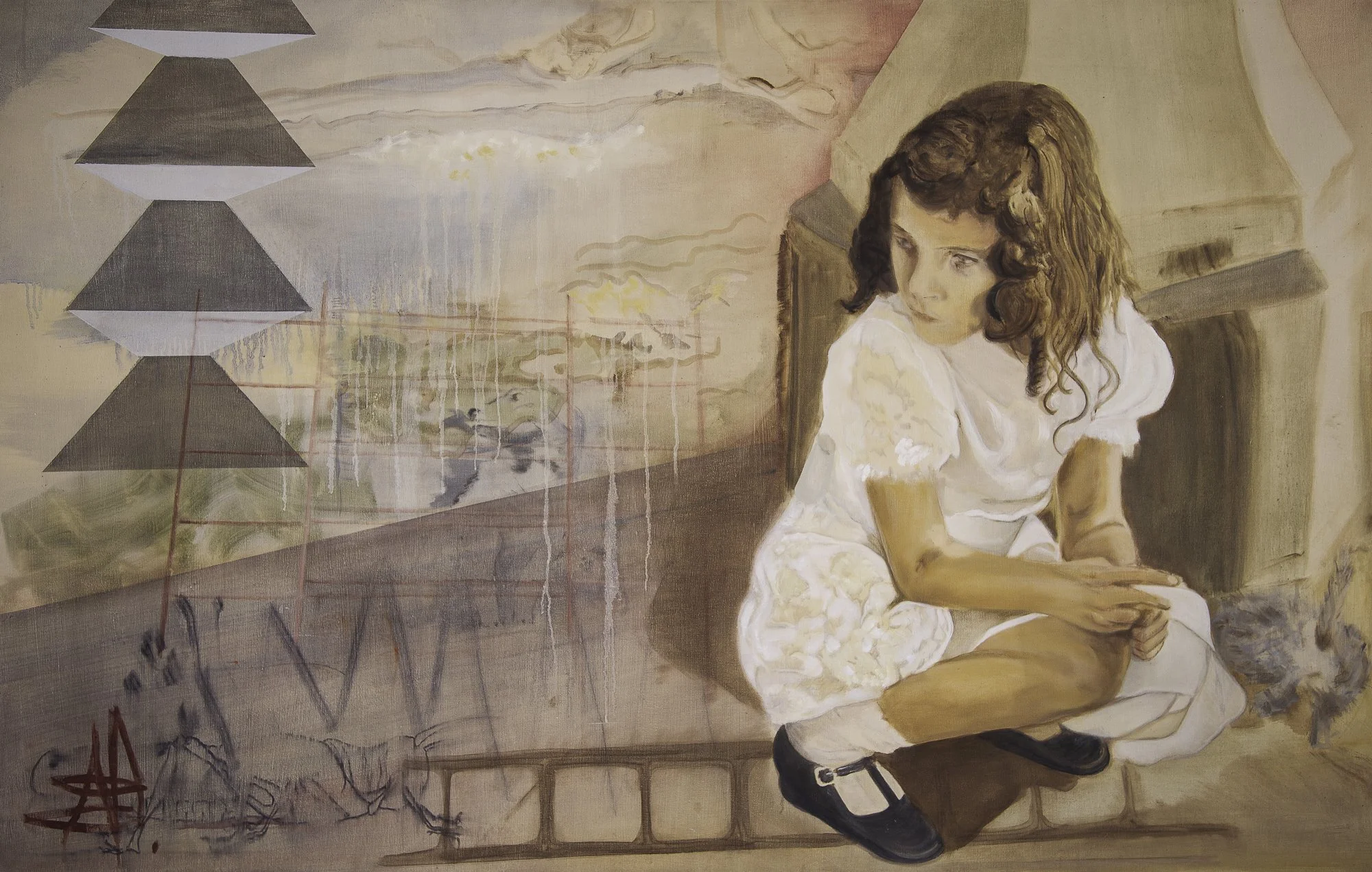
Nansi T. Lent, Mary Janes, 1980, oil on canvas, 42 in. x 66 in.
Síle Marrinan
Remnants I: Photography and the Nature of Remembering
Síle Marrinan's first solo exhibition at the gallery, Remnants I, explores photography not as documentation, but as a site where memory is formed, altered, and questioned. Bringing together photographs, video, wallpaper, and sculptural elements, the exhibition considers how remembered experiences shape our sense of self and what happens when those memories become fragmented or inaccessible.
In one body of work, Marrinan draws on family photographs from her childhood in Ireland, disrupting and transforming them through water, light, and time. As the photographs lose their documentary certainty, they evoke fleeting sensory fragments rather than complete narratives. In the second body of work, Marrinan turns toward the present, reflecting on how photographs become memories the moment they are made and fragments of experiences that can no longer be fully recalled. Together, the works in the show invite viewers to consider photography as both a catalyst for remembering and a reminder of memory’s instability.
About the artist: Síle Marrinan is a photographic artist based in the New York area. Marrinan’s practice began with the 2021 publication of If Only for a Moment, a meditation on childhood, motherhood, and seasonal rhythms. Her work has been shown in juried exhibitions across the U.S. In 2025, she presented two two-person exhibitions at BAU Gallery: Reframing Memory, which explored memories of mothers through the lens of the artists’ present lives, and Unraveling Light and Time, which considered how light and place can reawaken childhood memories.
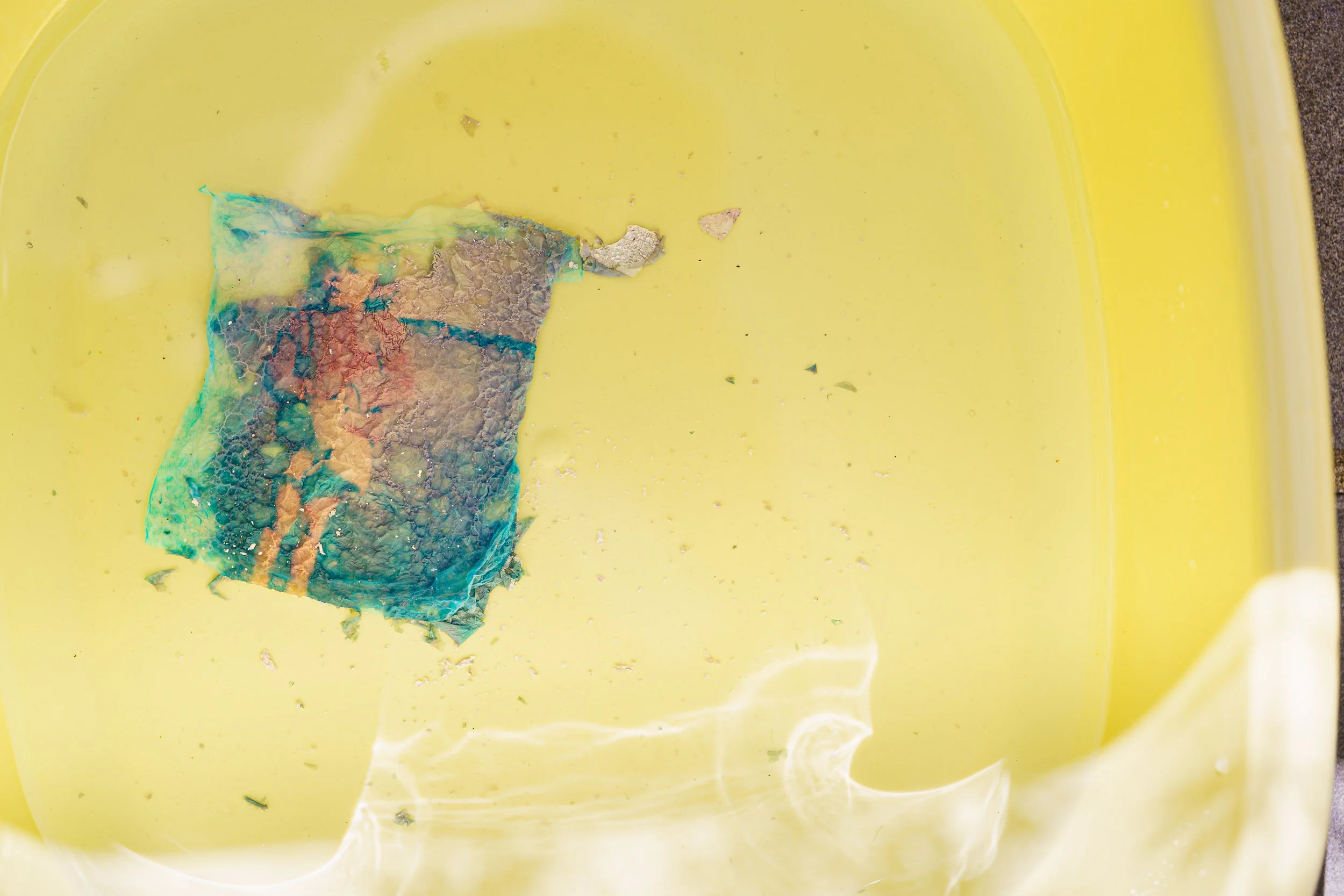
Síle Marrinan, A bit in a bucket (iii), 2026, archival print, 16 in. x 24 in.
Linda Lauro-Lazin
Early Works: Arches Series
Linda Lauro-Lazin’s sustained investigation of landscape and place spans more than five decades. Working initially in paint and collage, before moving into digital media, she has consistently explored how physical environments become sites of memory, perception, and imagination. The Arches Series emerged from a lucid dream she experienced during an artist residency at the Fondation Karolyi in the south of France. Over the next two years, Lauro-Lazin developed the work across New York and Andalusia, Spain, transforming the experience of the dream into a visual language of form, texture, and color.
The resulting paintings evoke the architecture of a cloistered garden: an enclosed space that offers both protection and a view outward. This tension between interiority and exteriority is central to the work. The paintings do not describe a particular landscape so much as evoke the psychological experience of inhabiting one—of looking outward while remaining within. Their atmosphere recalls Gaston Bachelard’s The Poetics of Space, particularly his understanding of remembered dwelling places as spaces that continue to live within us through reverie.
“Therefore, the places in which we have experienced daydreaming reconstitute them-selves in a new daydream, and it is because our memories of former dwelling-places are relived as day-dreams that these dwelling-places of the past remain in us for all time.”
About the artist: Linda Lauro-Lazin is a visual artist, an educator, and a technologist, developing a vernacular of digital mark-making and abstraction that conflates analog and digital painting. She is the Assistant Chair of the Department of Digital Arts in the School of Art at Pratt Institute. Lauro-Lazin is a Fulbright Scholar and the recipient of the Wave Hill Winter Workspace Residency, and the Fondation Karolyi Residency, with works exhibited at BAU Gallery, the Knockdown Center, Dorsky Museum among many others. She received an MFA from Pratt Institute and an MA from New York Institute of Technology.
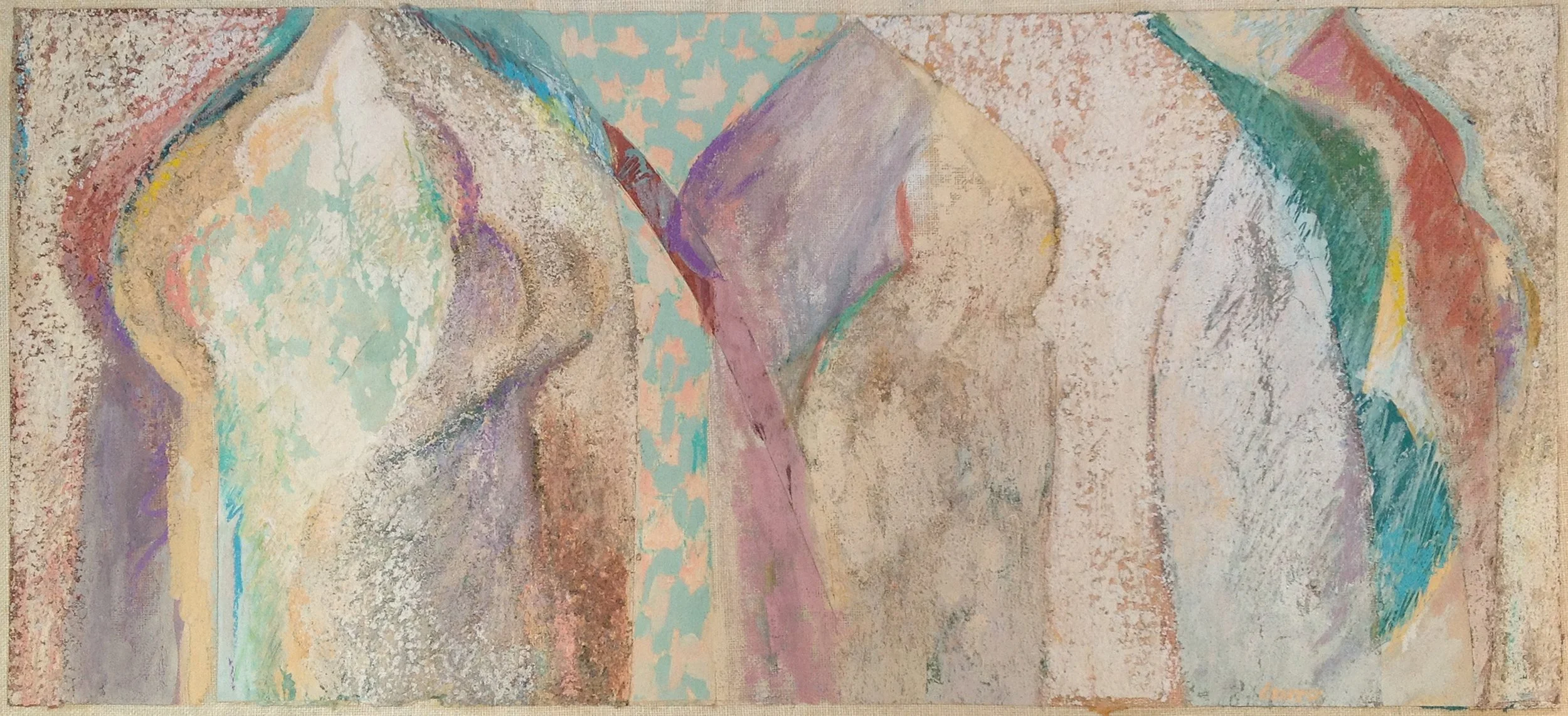
Linda Lauro-Lazin, Soñando, 1986, Oil, gouache, sand, and collage, 8 in. x 15 in.